Visual Dominance During Low-Level Forward Flight in Degraded Visual Environments
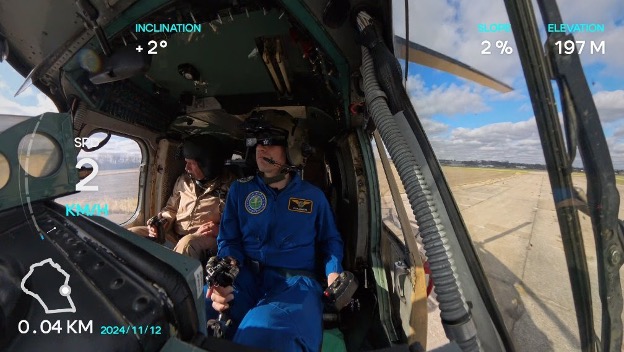
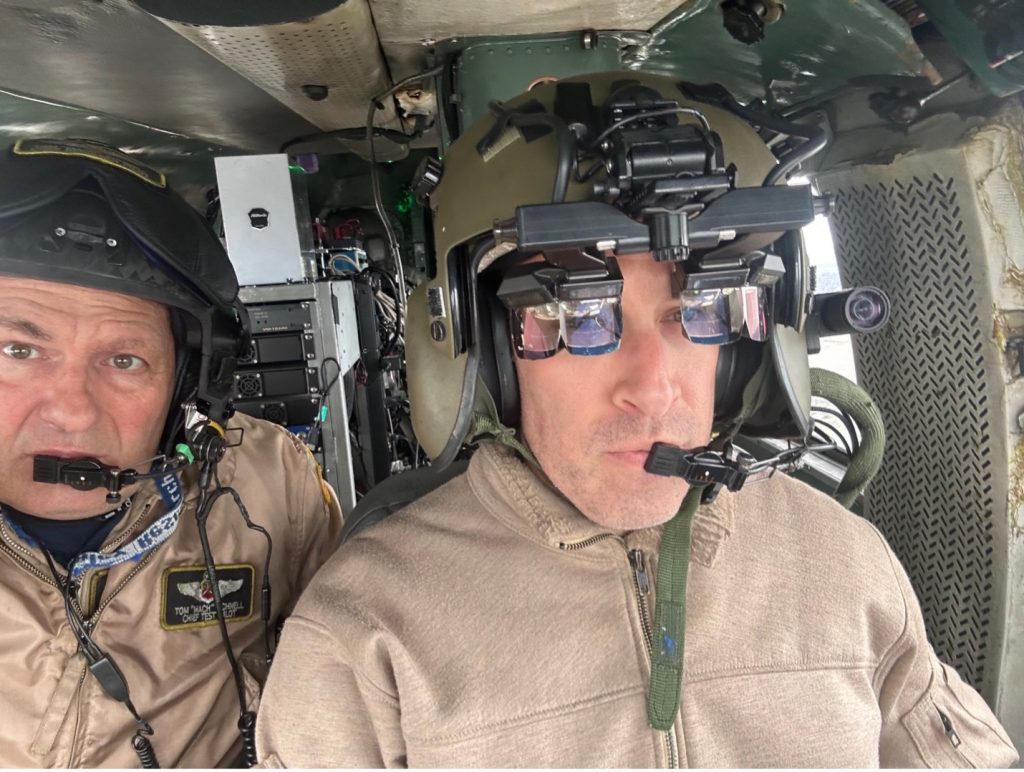
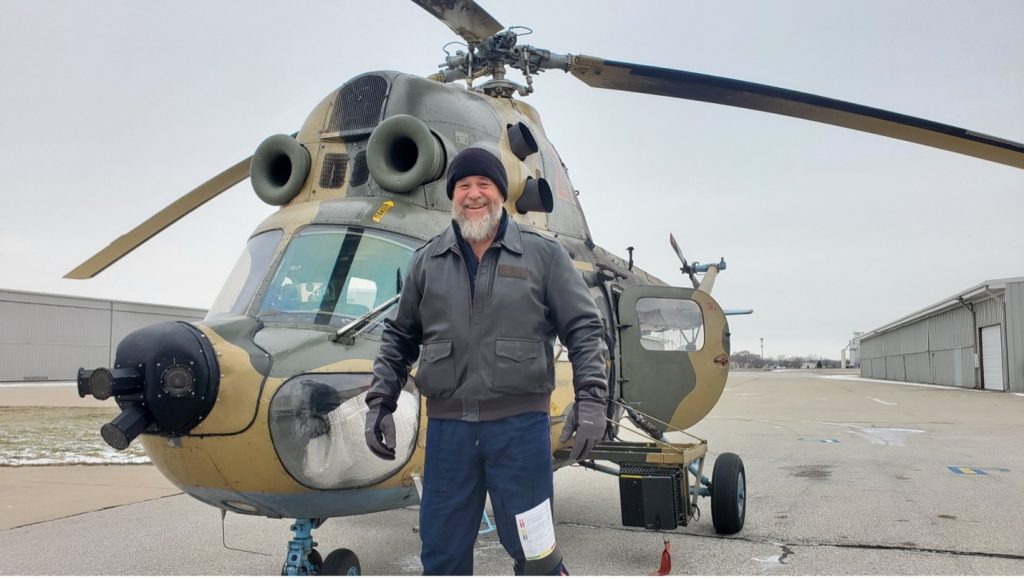
Degraded Visual Environments (DVEs) pose critical safety challenges for rotorcraft pilots by eliminating essential visual cues, such as the horizon line and peripheral references, which increases cognitive workload and impairs spatial orientation. In contrast, Good Visual Environments (GVEs) promote visual dominance, enabling pilots to rely on visual stimuli to override conflicting vestibular or proprioceptive signals, thereby lowering workload demands. This study investigated whether minimal line-based symbology, designed to mimic natural visual cues, can restore visual dominance and support natural visual processing mechanisms such as the optokinetic cervical reflex (OKCR). The experimental setup involved six evaluation pilots flying figure-eight maneuvers in a Mi-2 helicopter equipped with an SA-147 helmet-mounted display (HMD), under three distinct visual configurations: a narrow 30° field-of-view (NFOV) lacking peripheral stimuli, a wide 147° field-of-view (WFOV) incorporating peripheral stimuli, and a natural GVE baseline.
Effectiveness was assessed using a multi-modal framework that incorporated aircraft flight data, OKCR responses, physiological workload indicators, subjective pilot assessments, and qualitative feedback. Results showed that WFOV configurations improved OKCR compensation by 63% over NFOV and increased head scanning behavior by 93%, indicating partial restoration of visual dominance. However, WFOV achieved only 61% of GVE’s workload efficiency metrics, suggesting limitations in replicating full natural visual processing. The analysis established OKCR as an effective quantitative metric for assessing visual dominance, revealing greater complexity than previously understood, with head roll behavior influenced by maneuver phase, turn direction, and bank angle magnitude. Pilots flying under NFOV conditions reported “tunnel vision” and consciously limited head movement to reduce perceptual conflict. These findings demonstrate that minimal line-based symbology can partially restore visual dominance in DVEs, providing insights into the visual elements that contribute to visual dominance.
Visual Dominance During Hover in Degraded Visual Environments
Rotorcraft pilots operating in degraded visual environments (DVE) face significant challenges during hover flight, where reduced visual references increase the risk of spatial disorientation. Maggie Mayfield from the FAA’s Vertical Flight Aviation Safety Technologies Laboratory and the University of Iowa Operator Performance Laboratory team conducted a human factors flight test evaluation using the Mi-2 flight test platform and visual environment developed by Iowa OPL to examine how peripheral visual cues and artificial microtextures influence visual processing mechanisms that support visual dominance during simulated DVE hover operations.The study evaluated terrain elevation gridlines presented in either a narrow or wide helmet-mounted display field of view to simulate varying levels of peripheral visual cueing, while artificial microtextures were independently toggled on and off to assess the impact of additional fine visual detail. Across multiple hover maneuvers, pilots demonstrated significantly greater position deviation and groundspeed variability when peripheral visual cues were restricted, indicating degraded translational drift detection and horizontal stabilization performance. Because groundspeed captures translational motion prior to substantial positional displacement, the findings suggest pilots without peripheral cueing were less effective at detecting and correcting early drift onset.
Importantly, these performance degradations were not accompanied by significant increases in subjective workload, ECG-derived physiological workload measures, or control input amplitude, suggesting peripheral visual cueing primarily influenced low-level perceptual-motor processes associated with drift detection rather than broader workload or control strategy differences. Pilot feedback strongly aligned with the objective findings, with pilots consistently identifying peripheral environmental references and the horizon line as critical for maintaining orientation. The static artificial microtextures evaluated during this flight test did not produce measurable improvements in performance metrics and received mixed subjective feedback. Overall, the findings demonstrate the importance of visual processing mechanisms that support visual dominance during hover operations in degraded visual environments, particularly the role of peripheral optic flow and environmental context in translational drift detection and hover stabilization.
This flight test evaluation was presented and published at the Vertical Flight Society’s 82nd Forum, where it was recognized as a Top 3 paper in the Operations and Infrastructure Technical Session.

About
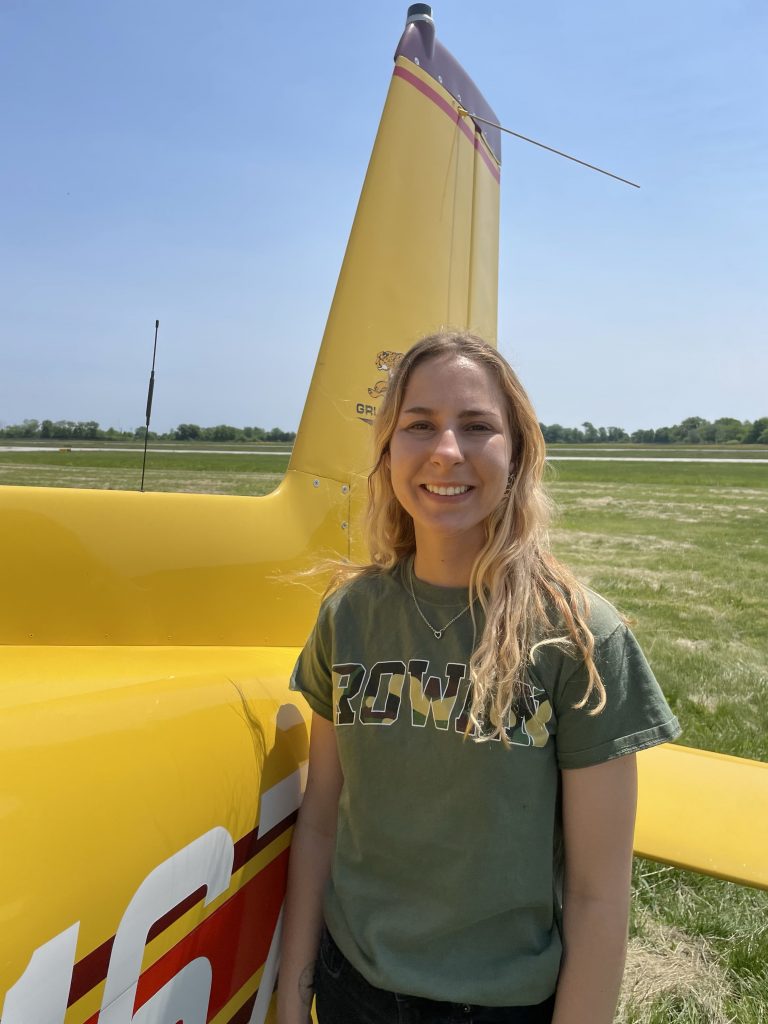
Maggie Mayfield earned her M.S. in Industrial Engineering from the University of Iowa, specializing in flight tests in simulated degraded visual environments. She served as the test director and flight test engineer for these flights and collaborated with the University of Iowa’s Operator Performance Laboratory on their Mi-2 Hoplite. Currently, she works at the FAA Technical Center with the Vertical Flight Aviation Simulation Team, continuing her research in aviation safety.
Related Posts
Simulated Air Traffic Control Environment (SATCE)
Enhanced Helicopter Vision Systems (EHVS)