Skip to main content
VR HeliSTART Project
Research
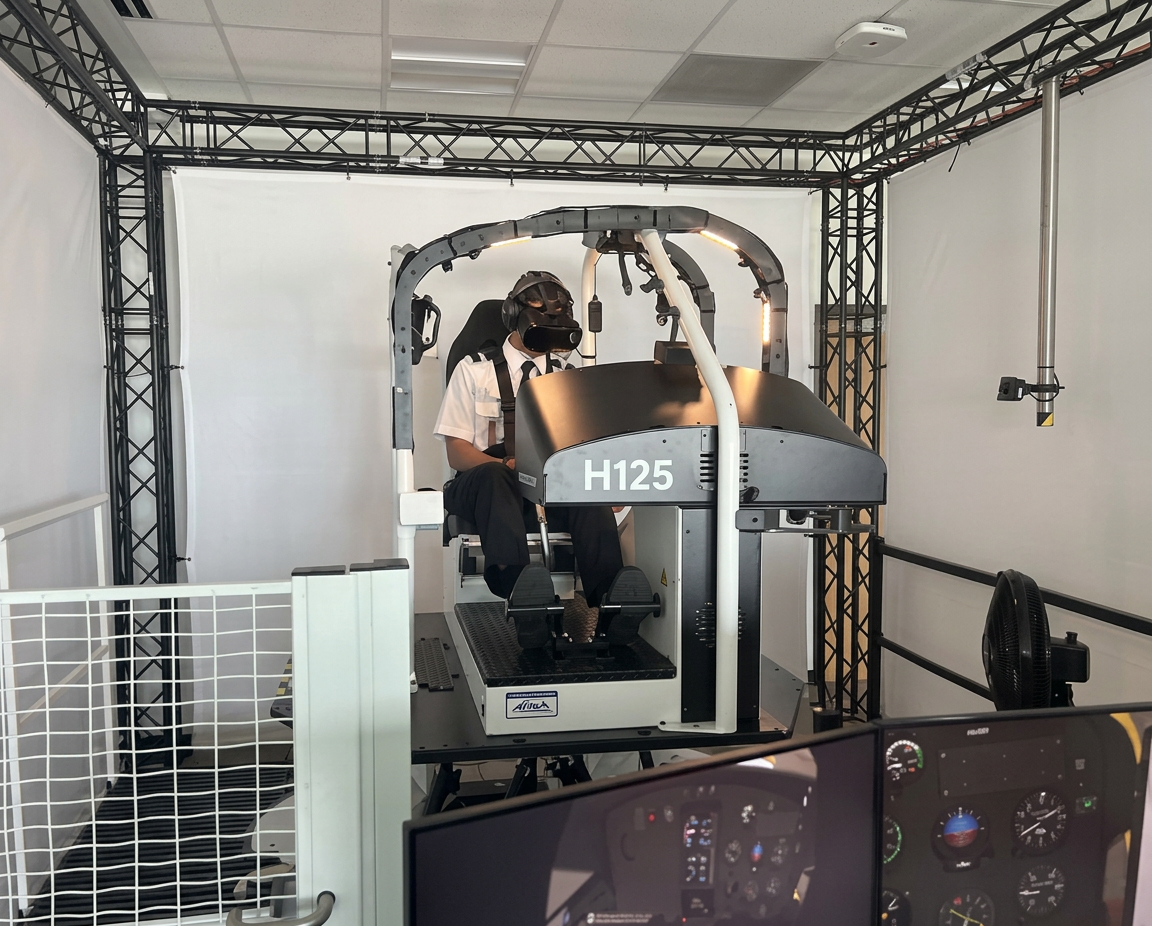
Over the past few years, a new generation of extended reality (XR) helicopter flight training devices (FTDs) has emerged. They are more compact and cheaper than current Full Flight Simulators (FFS), which make them usable in traditional flight schools. However, research is still lacking on the transfer of training from these simulators to the actual aircraft and the new challenges they bring: their single-seat configuration prevents instructors from demonstrating maneuvers or feeling student control inputs, and prolonged VR use raises concerns about motion sickness.
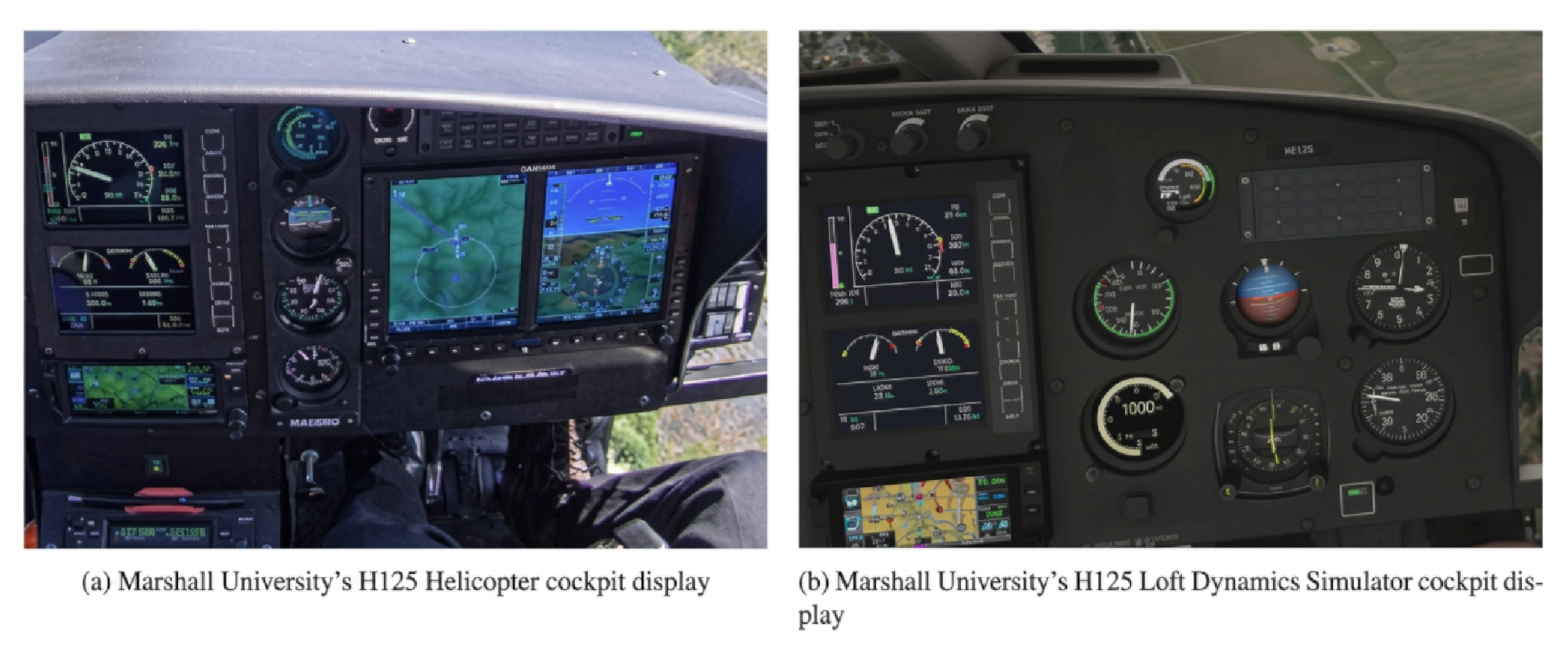
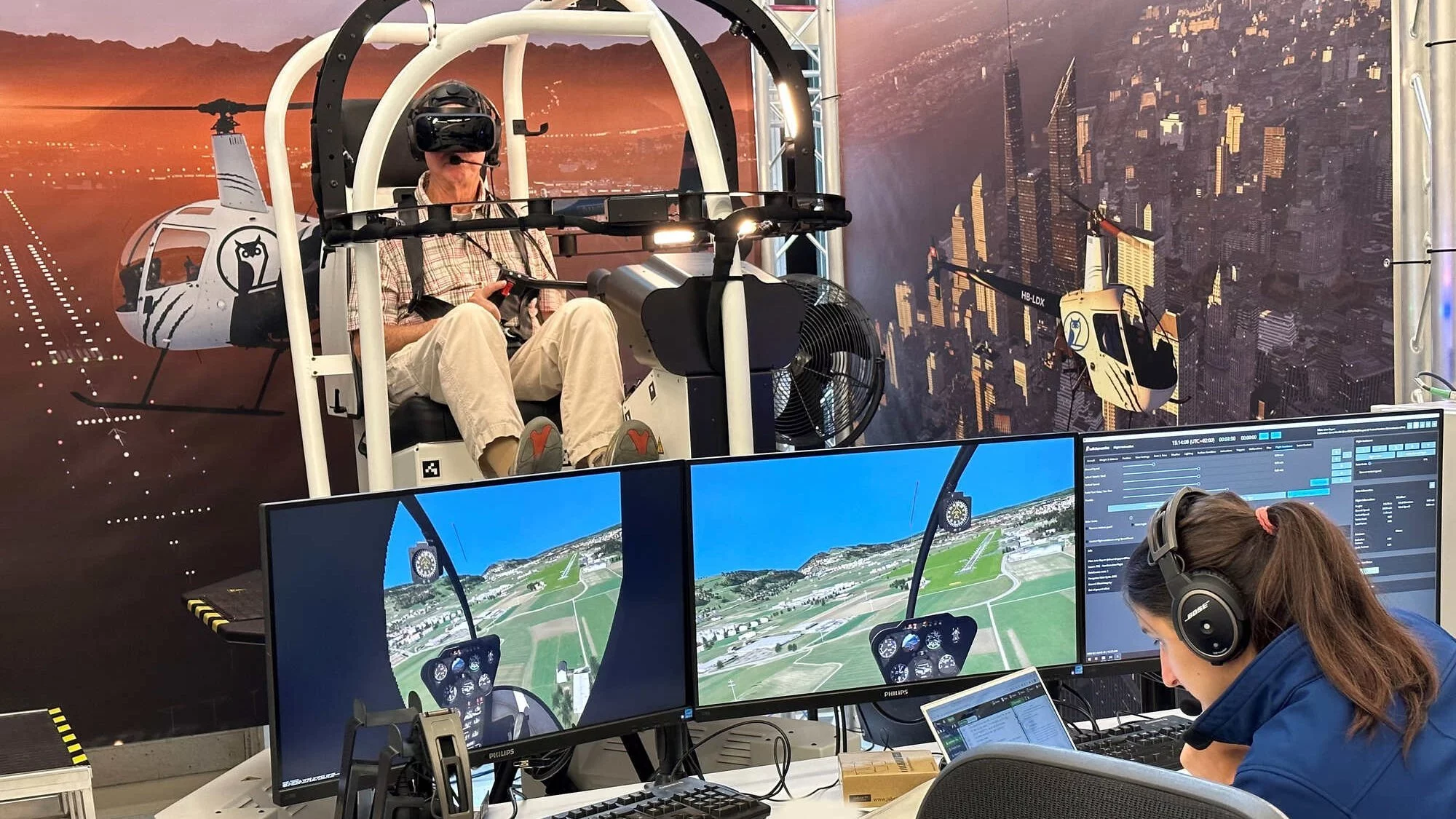
To address these questions, the FAA’s Vertical Flight Aviation Safety Technologies (VFAST) team conducted a 15-week study at the Bill Noe Flight School at Marshall University. The study evaluated the effectiveness of the Loft Dynamics H125 VR reduced-motion platform simulator in training fixed-wing pilots to fly helicopters, identifying maneuver-specific areas of positive and negative transfer and assessing whether VR-specific constraints could be mitigated through instructional design.
Eleven students completed three four-week blocks of instruction from certified flight instructors in the simulator. Each block concluded with evaluations in the simulator and in an actual H125 helicopter, covering 36 maneuvers from the commercial helicopter Airman Certification Standards (ACS). Performance was graded on a three-level ACS-based scale (below private, private, and commercial pilot standard or above), combining objective flight parameter analysis with subjective assessments from evaluators. Post-lesson questionnaires from instructors and students captured feedback on the training itself.
Regarding the simulator training, in addition to the ACS maneuvers, students were trained on a wide range of situations and emergencies in more realistic and fully developed scenarios than would be feasible or safe in the helicopter. Overall, instructors deemed the training highly realistic and rated their workload as substantially lower than in live flight, allowing them to devote more attention to the students. Although the single-seat configuration prevented them from assisting students on the controls, they quickly adapted their teaching methods. Students also rated the training as highly immersive and valuable, and none of them experienced significant motion sickness. After the final flight, all said they would recommend this simulator training to other fixed-wing pilots. Finally, the simulator reliability was very high, with only approximately 1% of training time lost.
Looking at the evaluations, in their first ever helicopter flight, students performed at or above private pilot standard on at least 70% of maneuvers, and subsequent flights showed consistent improvement. However, simulator performance improved faster than helicopter performance, meaning that further refinement of skills in the simulator did not appear to transfer effectively within the study’s time frame. Some limitations were identified in teaching Unintended Yaw (UY) conditions, Vortex Ring State onset recognition, and autorotation flare timing, due to the modeling, the motion platform’s vibratory cues, and the head-mounted display’s depth perception, respectively.
Overall, the use of a reduced-motion VR simulator in initial helicopter pilot training proved valuable, offering a safe environment to rapidly develop basic flying skills and practice hazardous emergency procedures in complex scenarios.
About
Cliff Johnson and Dr. Eleni Sotiropoulos were the Principal Investigators for this project. Providing additional research and data collection support were VFAST team members Grant Morfitt, Tim Kuhn, Andres Geffard, Stephanie Stead, Jean Christophe Geffard, Karen DiMeo, Carly Iverson, Maggie Mayfield, Abigail Gunnels, Molly Connolly, John Geyser (SME), and Anne Godfrey (SME).
Acknowledgment
The VFAST team would like to thank flight instructors Nick Mayhew and Stephane Rebeix for their excellence and commitment. In addition, we would like to acknowledge the students of Marshall University who took part in this study, and Rusty Pittman and Nancy Ritter. The authors are also grateful for the continued technical support provided by Loft Dynamics. Finally, we would like to thank the various members of the FAA's Flight Standards organization, including the Training and Simulation Group, who contributed their input to the design.
Publications
Sotiropoulos-Georgiopoulos, E. and Johnson, C., "FAA VR-HeliSTART (Virtual Reality-Helicopter Simulator Training for Airplane to Rotorcraft Transition): Methodology and Overall Results," Vertical Flight Society 82nd Annual Forum and Technology Display, West Palm Beach, Florida, May 5, 2026, https://doi.org/10.4050/F-0082-2026-0118
Sotiropoulos-Georgiopoulos, E. and Johnson, C., "FAA VR-HeliSTART (Virtual Reality-Helicopter Simulator Training for Airplane to Rotorcraft Transition): Hovering Maneuvers," Vertical Flight Society 82nd Annual Forum and Technology Display, West Palm Beach, Florida, May 5, 2026, https://doi.org/10.4050/F-0082-2026-0119.
Sotiropoulos-Georgiopoulos, E. and Johnson, C., "FAA VR-HeliSTART (Virtual Reality-Helicopter Simulator Training for Airplane to Rotorcraft Transition): Emergency and Performance Maneuvers", 52nd European Rotorcraft Forum, Amsterdam, NL, September 2026. Link to Full Article
Other Articles & Presentations
“How good are VR Trained pilots? A Review of the FAA VR Pilot Transition Study”, Sotiropoulos-Georgiopoulos, E., Johnson, C., Mayhew, N., and Rebeix S., Verticon 2026, Atlanta, GA
Awards
FAA VR-HeliSTART (Virtual Reality-Helicopter Simulator Training for Airplane to Rotorcraft Transition): Hovering Maneuvers
Pictures
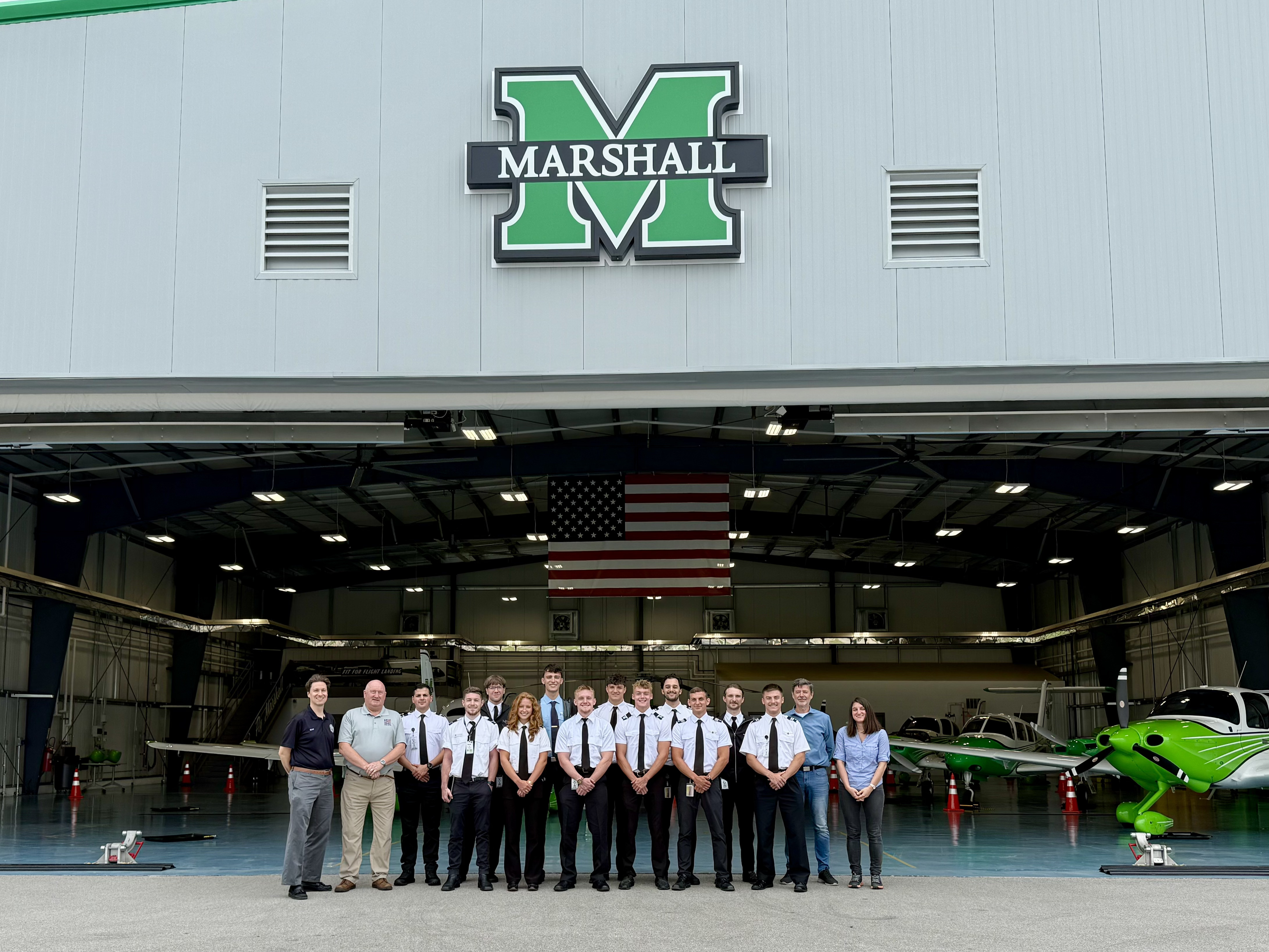
11 Participant Pilots in the VR HeliSTART Project
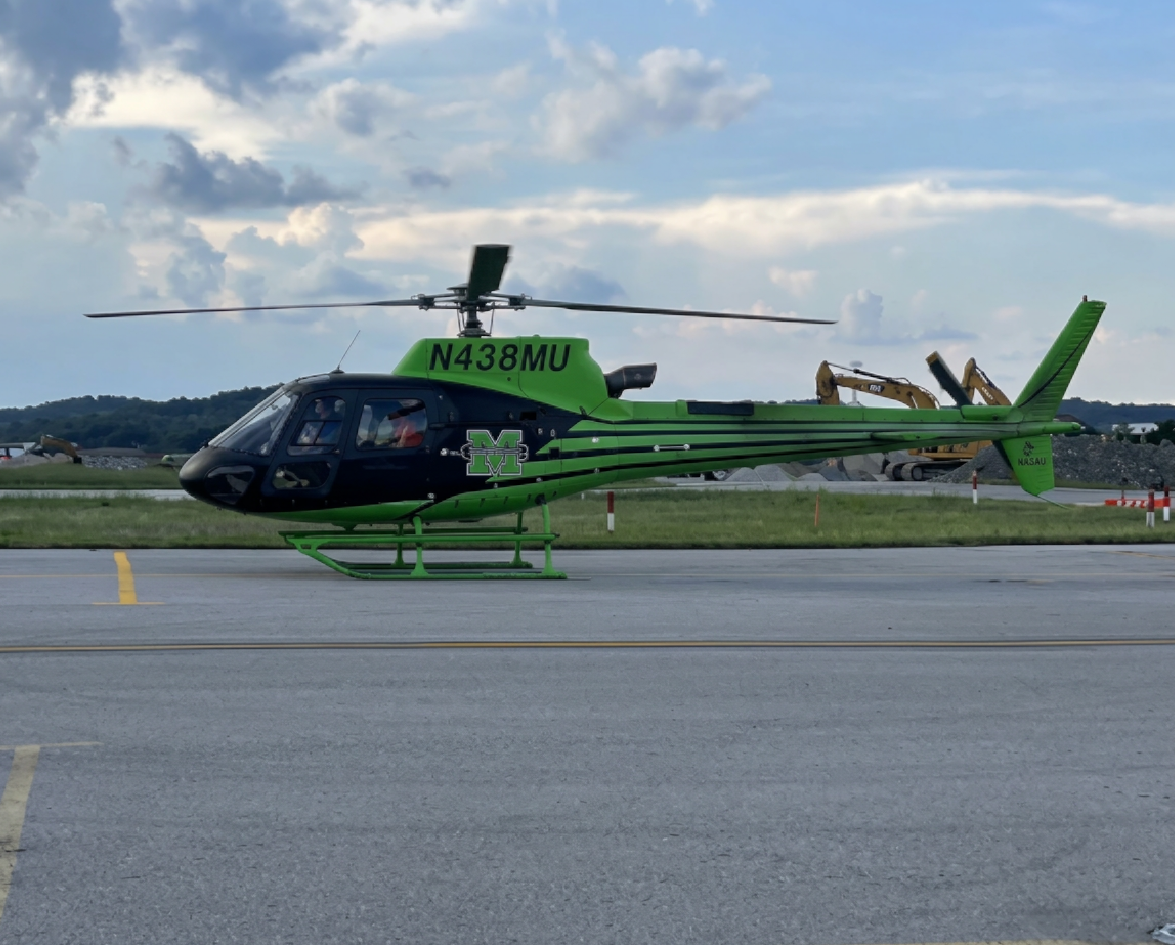
Marshall University Helicopter
Marshall University H125 Flight Simulator
Related Posts