Skip to main content
Downwash & Outwash
Research
Downwash and outwash are two different, but related phenomena associated with the aerodynamics of helicopter rotors. This strong flow can lead to injury, damage, and disruption to people and property within the vicinity of vertiport environments. An example of a fatal accident at Kadena Air Base Okinawa, Japan, in rotorcraft HH-60W (year 2025) led to a civilian school teacher getting blown over from the outwash and striking her head against concrete with much greater force than during a routine fall. She died from her injuries five days later. The FAA’s research aims to highlight the dangers surrounding downwash and outwash and better quantify the phenomena in order to define safety and caution zones to protect people and property from the hazardous zones of downwash and outwash.
The FAA is developing a submission form to capture safety reports of Downwash & Outwash Incidents and Accidents, similar to those for other airborne hazards. This information can be augmented by examining surveillance and weather conditions at a given date and time of an incident in order to quantify the specific operational conditions. By collecting this information and de-identifying it, the FAA and industry partners can better understand the breadth of downwash and outwash hotspot areas and identify precursors/causal factors for this phenomena. Research efforts are also underway to develop an algorithm that compares key factors specific to each DWOW incident report, including elements such as aircraft design, groundspeed, weight, maneuverability, weather conditions, altitude, etc. The Downwash and Outwash Safety Algorithm seeks to produce a realistic environmental hazard metric that accounts for height and wind, uses validated ground-effect physics, and scales correctly with helicopter/eVTOL size.
Through data analysis and collection of sample reports, researchers at the VFAST Laboratory have successfully developed a metric to measure and model DWOW velocities and patterns, identify safe operating zones and buffer areas, and develop mitigation strategies for existing and future vertiport designs. Research also compares the effects of Downwash and Outwash airflows, to identify which conditions/profiles pose a higher risk. Downwash can cause injury or damage if people or vehicles are in the path during takeoff/landing, whilst outwash can create hazardous lateral flows on the ground, especially in confined urban spaces. One solution would be to convert the Heliport Protection Zone (HPZ) to a Downwash/Outwash Caution Area (DCA), making the public more aware of the potential risks and hazards in the vicinity of vertiports/heliports.
About
The report and presentation by Charles C Johnson, Research Engineer and Project Lead at the FAA William J Hughes Technical Center provides an in-depth insight to the outgoing study, along with references and validations. Supporting member of this study, Paola Zanella, assisted in the Literary Review, Metric Presentation, and Reporting Forms to provide in depth research for this ongoing project.
Related Posts
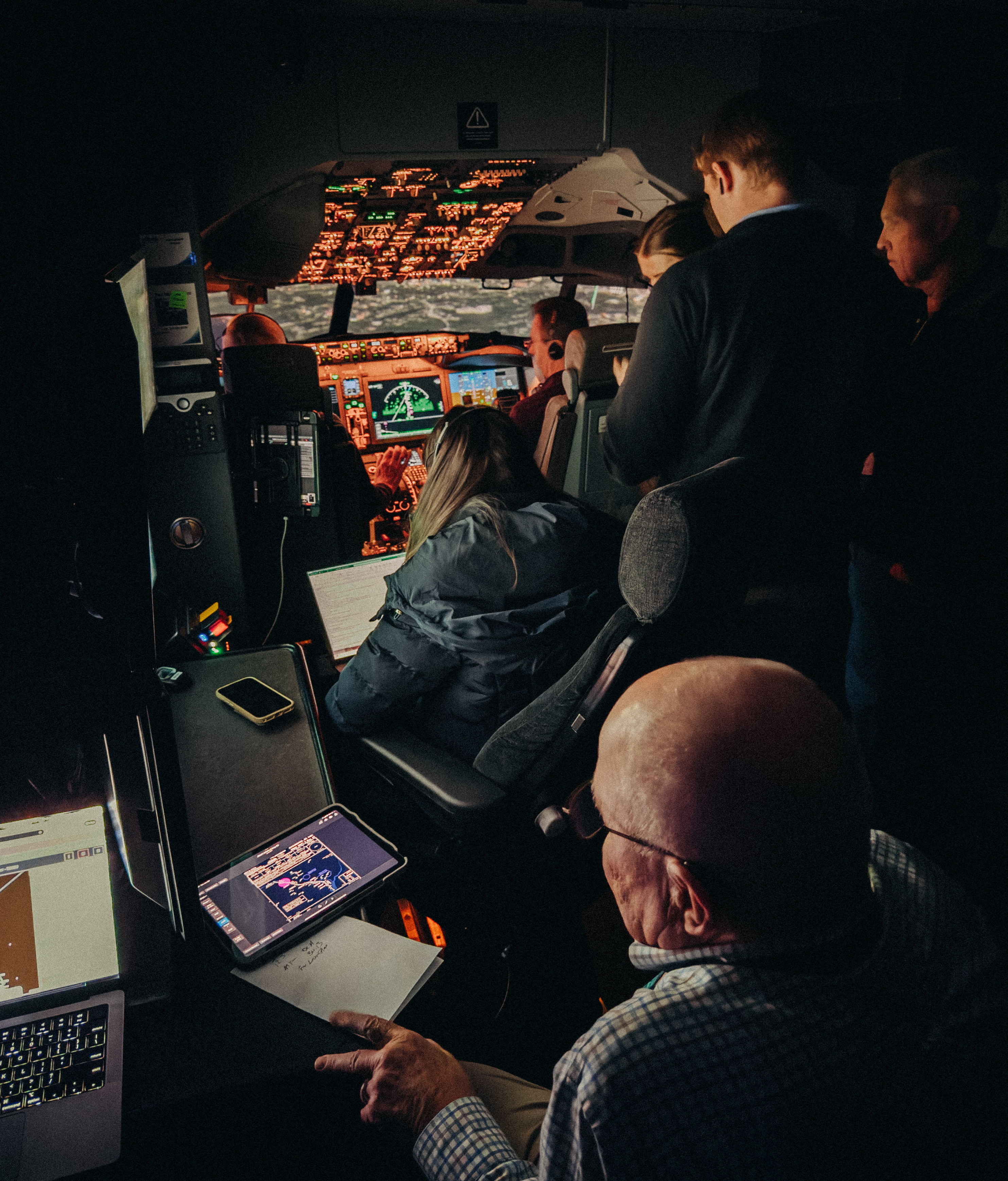
Simulated Air Traffic Control Environment (SATCE)
Read article