Skip to main content
Digital Towers
Research
Uncontrolled airport operations such as taxiing, ground handling, and non‑scheduled movements are a major source of aviation incidents and accidents, especially for general aviation operations at towered and non-towered airports. The research aims to show the benefits that can be obtained, as well as identify any operational constraints that appear from controllers managing Class D/E airspace from a Digital Tower potentially located miles away from the airport. This could allow digital towers to represent a cost-effective and scalable solution for implementing air traffic control (ATC) services in the National Airspace System (NAS). This is envisioned both for airports in uncontrolled airspace as well as remote areas that could benefit from temporary or full-time services from a Digital Tower solution, or current Class D/E facilities where constructing a new physical tower may be cost-prohibitive but a Digital Tower would be a good alternative.
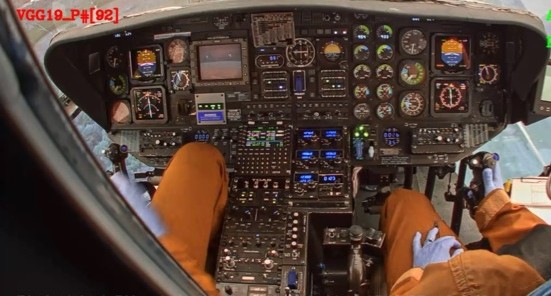
The FAA is performing Digital Tower testing to qualify systems designed with optical sensors (day/night cameras, infrared/thermal cameras) and displays to provide controllers with other FAA surveillance and communication equipment to meet operational ATC requirements and enable controllers to be located at locations other than in an elevated control tower, potentially enabling digital air traffic control from a facility that is not located within the airport’s physical boundary while still providing safe and efficient ATC services. The study focused on examining the digital tower capability to be able to visually acquire and provide VFR separation services between air traffic. That included utilizing test aircraft with test pilots to execute various test profiles involving complex interactions and spatial relationships between multiple aircraft operating in towered airspace. An assortment of fixed-wing aircraft and rotorcraft were used to conduct flight operations and test profiles in towered airspace such as: traffic patterns, converging runways, land and hold short operations, simulated parallel runway operations, taxi operations, and other test conditions. This enabled the test team to identify and correct errors with the system and validate the digital tower concept while simultaneously mitigating any operational risks prior to deployment of the technology within the NAS.
Digital Towers testing began with single runway operations in Feb. 2025 and concluded with multi-runway operations in Aug. 2026. Additional testing is planned for future digital towers systems as well as when upgrades are performed to the current digital tower system deployed at Atlantic City International Airport (KACY). The thorough amount of testing performed to date is due predominantly to the need to examine a range of traffic conditions and scenarios while exposing the digital tower system to various events, including nominal and failure modes, to ensure operational safety of the ATC system. Through this research, the FAA is seeking to test the technical and operational feasibility of digital towers, establish minimum standards for qualified vendors to provide digital tower technology to airports seeking to purchase and operate these systems, and explore the benefits and limitations of some aspects of digital tower technology as an aid to traditional air traffic control towers.
About
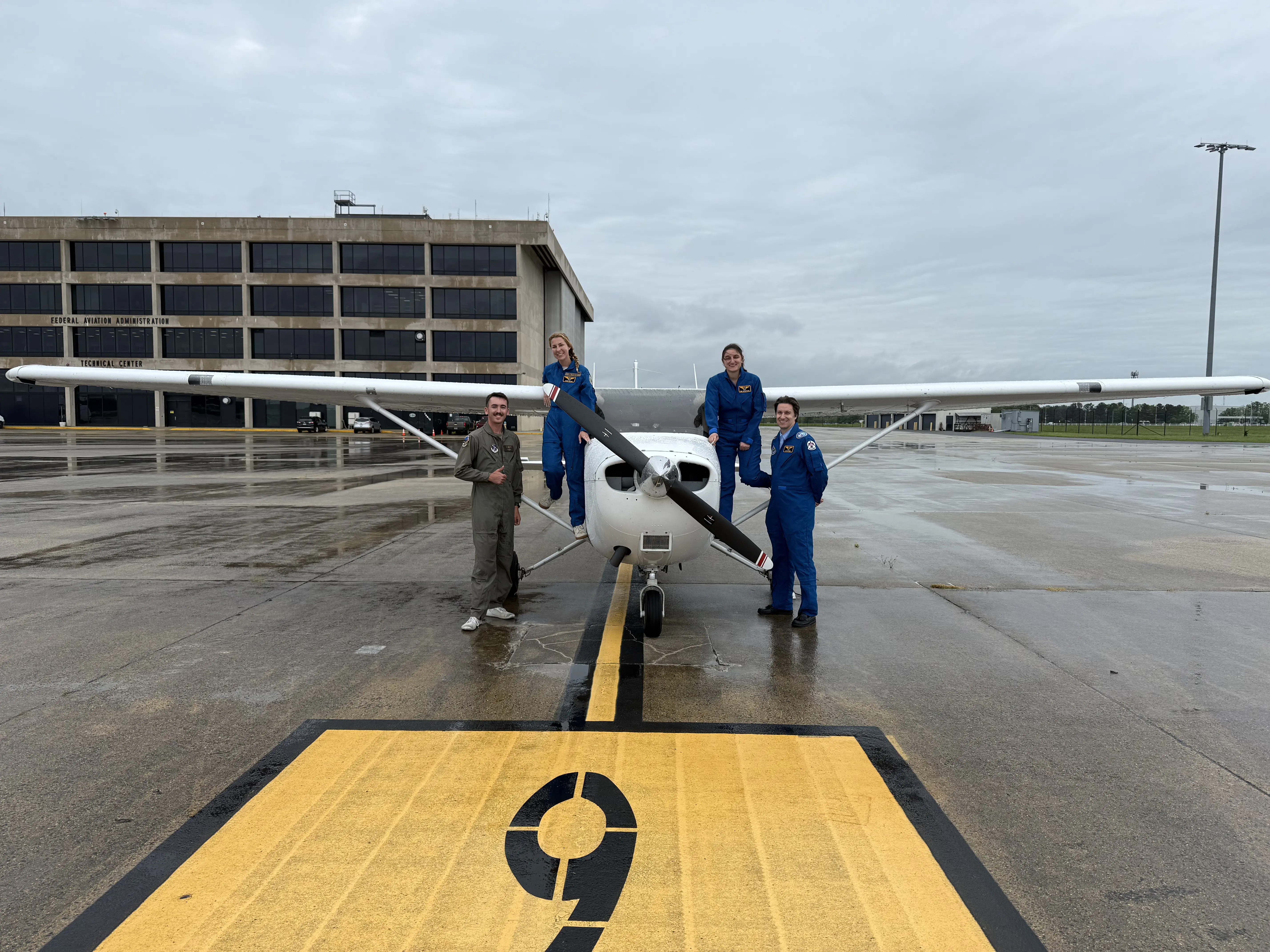
This research effort is led by lead test pilot, Cliff Johnson, along with supporting members and test pilots, Eleni Sotiropoulos and Maggie Mayfield. In addition, several entities, including Big Sky Aviation in Millville, NJ, Fly Legacy Aviation in Northeast Philadelphia, and Ascent Aero Academy in Lumberton, NJ, support the research effort by providing aircraft, rotorcraft, and operational/logistics support. Additionally, ATAC and EIT play a key role in recruiting pilots and securing aircraft/rotorcraft through our partners, while the Forthill Group provides human factors and test team support. Further partners include the Atlantic City International Airport (KACY), the ACY Control Tower, and the National Association of Air Traffic Controllers (NATCA). All of these organizations work together to provide aircraft, pilots, test personnel, test subjects, perform data collection, and execute airborne and ground-based test profiles to ensure safe and impactful Digital Towers research.
Further partners include the Atlantic City International Airport (KACY), the ACY Control Tower, and the National Association of Air Traffic Controllers (NATCA). All of these organizations work together to provide aircraft, pilots, test personnel, test subjects, perform data collection, and execute airborne and ground-based test profiles to ensure safe and impactful Digital Towers research.
Related Posts

Simulated Air Traffic Control Environment (SATCE)
Read article